Department of Mathematics
University of Pennsylvania
David Rittenhouse Lab
209 South 33rd Street
Philadelphia PA 19104
(215) 898-7845
Office: DRL 3E5C

Spring 2024: Math 5090
Monday 2:00-3:00 (online)
or by appointment
Research
CV
Here is a link to my CV (updated spring 2024).
Topics and Links to Papers
I am currently working on understanding some unusual connections between Fourier Restriction Theory and classical Geometric Invariant Theory. The idea here is that Fourier restriction inequalities exhibit natural symmetry under the affine transformations (and not just orthogonal transformations), and this symmetry allows one to identify previously-unknown geometric quantities which measure the "non-flatness" of submanifolds of Euclidean space. The first major results in this direction are available here, which use these ideas to characterize Dan Oberlin's "affine Hausdorff measure."
I am also interested in the relationship between decoupling inequalities and number theory. My AIM SQuaRE collaborators and I have a recent paper in which we show how a well-known principle (namely, that decoupling inequalities imply counting results for solutions of systems of Diophantine equations) can be effectively reversed in some cases.
Here are all my recent papers on the arXiv.
Professional Activities
- Harmonic Analysis People's Presentations on YouTube (HAPPY).
- Madison Lectures in Harmonic Analysis 2024
- July 2024 HCM Workshop: Uniformity and Stability of Oscillatory Integrals
Talk Slides
- Sublevel Set Estimates in Higher Dimensions: Symmetry and Uniformity
- Radon-Brascamp-Lieb Inequalities and Model Operators
- Swarthmore College Math-Stat Colloquium: Kakeya Needle Problem Here is a YouTube animation that I produced for the talk.
- AMS September 2019 Section Meeting: Multilinear Oscillatory Integral Operators
- Madison Lectures in Fourier Analysis 2019
Miscellaneous
Links
Department of Mathematics Bridge Fellowship: I have been a co-advisor with Ryan Hynd since shortly after he created the program.
Mathematics Department Calendar
Other Items
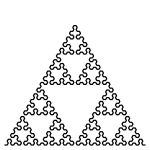
IFS Fractal Archive: Some images that I produced in 2016 in connection with the Penn Summer Math Academy.
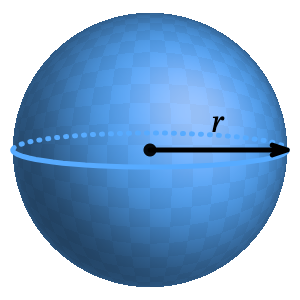
Animated Spherical Harmonics updated in 2024.
CNSF 2013 Animation: An animation that I made in 2013 as part of my presentation at the Coalition for National Science Funding 19th Annual Exhibition.
Teaching
Lecture Notes
I have a set of online notes for Math 5080-5090, a first course in analysis for advanced undergraduates and Masters students. The notes are meant to supplement rather than replace a traditional textbook. They are written at an intermediate level of detail which is meant to suggest ways of thinking about proofs in analysis that are durable and can be filled out to full detail as students gain experience and appropriately-tuned intuition.
Inclusive Teaching
For a number of years, I taught Math 104 in the SAIL (Structured, Active, In-Class Learning) format.
Active learning techniques have been shown to decrease failure rates in STEM classes (from 33.8% to 21.8%).
A core challenge is that students feel less successful despite having learned more.
I have developed a particular emphasis on fostering freshman students' sense of social belonging in the classroom. Here is a link to an article by Aguilar, Walton, and Weiman that has heavily influenced my thinking about teaching. I recently wrote an article about Social Belonging in Introductory Calculus and spoke a little more about these issues in an Omnia article.
Computational Content Creation
I have written some tools for creating and maintaining large banks of LaTeX-formatted questions. The project is available on GitHub. The project is a direct outgrowth of experiences in the classroom. The underlying observation is that simple randomization (where problems, e.g., in Canvas Quizzes, are generated by plugging in random values for key variables) often intruduces unwanted algebraic challenges for students. A better approach is to develop and curate massive banks of questions which are highly optimized for computational simplicity. I am happy to provide examples on request.
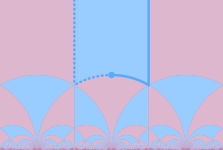
Recently I have also been developing an in-browser tool to facilitate production of high-quality mathematical plots.

I have also experimented with an in-browser markdown-type compiler for mathematics notes. The Math 5080-5090 lecture notes were produced in this way.
Worksheet Templates
Here is a sample worksheet produced using XeLaTeX. The source is available here. Compilation requires downloading and installing the font Fira Sans.
Ximera
Prior to COVID, I made a collection of self-contained Ximera activities for Math 104.
Miscellaneous
Links
Department of Mathematics Bridge Fellowship: I have been a co-advisor with Ryan Hynd since shortly after he created the program.
Mathematics Department Calendar
Other Items
IFS Fractal Archive: Some images that I produced in 2016 in connection with the Penn Summer Math Academy.
Animated Spherical Harmonics updated in 2024.
CNSF 2013 Animation: An animation that I made in 2013 as part of my presentation at the Coalition for National Science Funding 19th Annual Exhibition.